BRAND NEW PROGRAM SPOTLIGHTS IMPORTANCE OF DIVERSE STORIES FROM KEY PARTNERS OF THE GLOBAL EXHIBITION COMMUNITY
“CINEMACON® FILM SHOWCASE” WILL BE HELD AT THE COLOSSEUM IN CAESARS PALACE MONDAY AFTERNOON ON APRIL 13
LAS VEGAS – Feb. 12, 2026 – CinemaCon®, the world’s largest convention for the global cinema industry and the official convention of Cinema United, announced today that it will host a Monday afternoon program for the first time in the Colosseum at Caesars Palace, titled the “CinemaCon® Film Showcase.” The presentation on April 13 will feature Angel, Row K Entertainment and STUDIOCANAL, all three of which will showcase exciting new films from their upcoming theatrical slates to the global exhibition community.
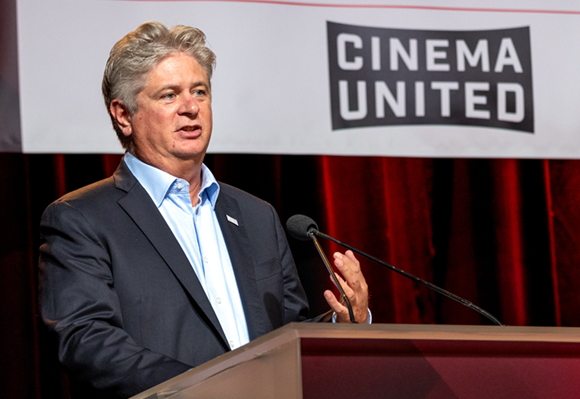
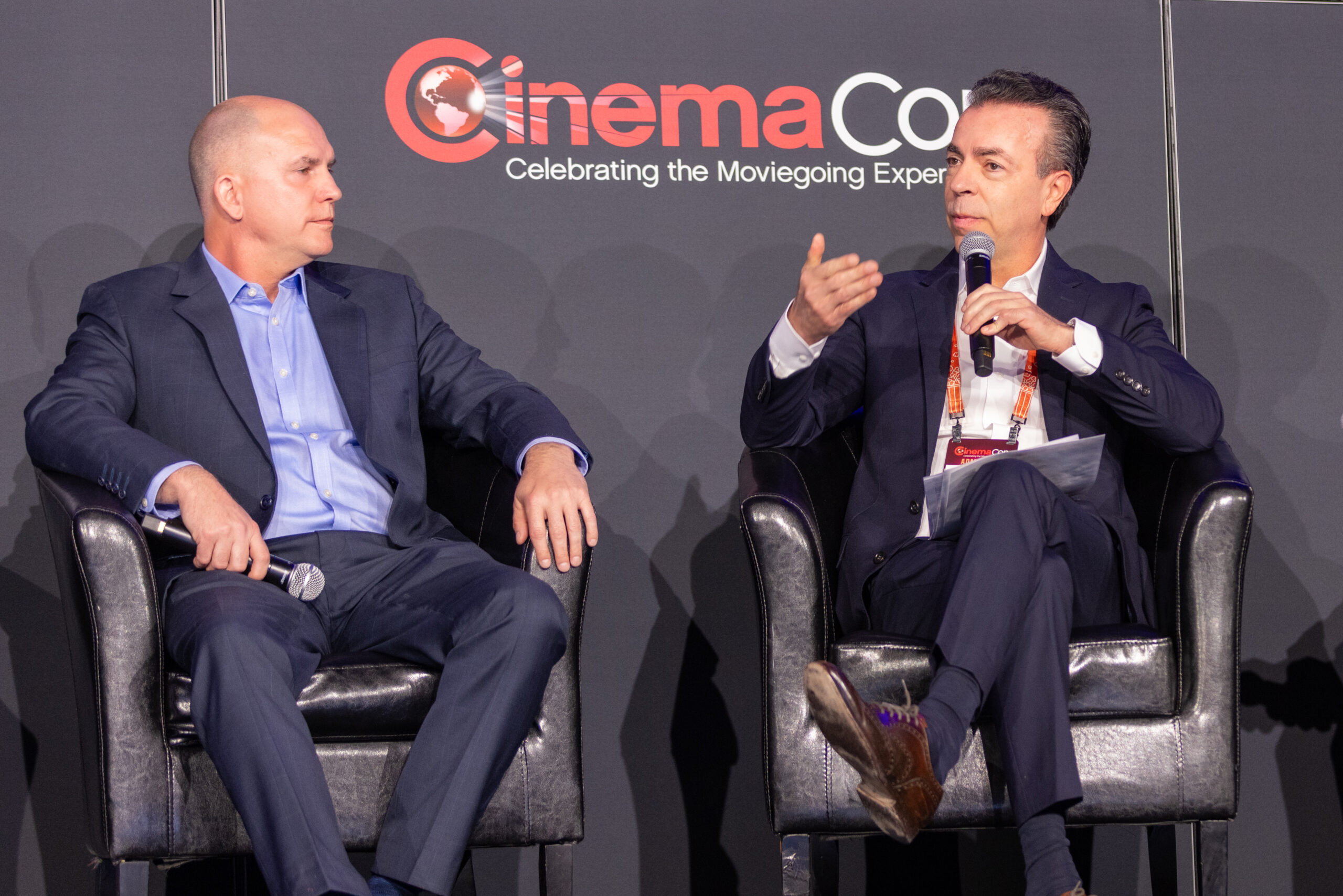
“As a global industry that depends on a diverse pipeline of movies from a wide array of distribution partners, we are incredibly excited to welcome Angel, Row K Entertainment and STUDIOCANAL to be part of this important new program on Monday afternoon,” said Michael O’Leary, President and CEO of Cinema United. “Movie theatres around the world in cities and towns of all sizes rely upon these movies 52 weeks out of the year. They are essential to our industry, and by shining a light on these companies, we celebrate their importance in bringing great movies to fans of all ages across the globe.”
CEO of STUDIOCANAL, Chief Content Officer of CANAL+ Anna Marsh commented: “We are thrilled to be part of CinemaCon 2026 and to take part in this inaugural film showcase. Presenting our slate at The Colosseum and connecting with the exhibition community is a very special moment for STUDIOCANAL and the Canal+ group. We remain firmly committed to films made for the big screen, and we thank Michael O’Leary and his team for providing such an important platform to highlight the creativity, ambition and investment behind bringing great stories to cinemas across the globe.”
“Theaters thrive when audiences have options,” said Executive Vice President and Head of Theatrical at Angel, Brandon Purdie. “Angel is committed to bringing audiences a bold, varied slate of films. We’re proud to stand with Cinema United, CinemaCon, and our partners in exhibition as we redefine the future of theatrical moviegoing together.”
“CinemaCon is a powerful reminder that the theatrical experience remains the heartbeat of our industry, bringing audiences together in a way no other medium can,” said Row K Co-Chairmen Christopher Woodrow and Raj Singh. “Row K was built around the belief that great films deserve to be experienced on the big screen, and we’re proud to join Angel and STUDIOCANAL to showcase a slate designed to deliver bold storytelling, unforgettable performances, and the kind of communal moviegoing moments that only theaters can provide.”
Hosted by Cinema United, CinemaCon is the world’s premier showcase of theatrical exhibition, taking place April 13-16 at Caesars Palace in Las Vegas.
About Angel
Angel (NYSE: ANGX) is a media and technology company guided by two million grassroots Angel Guild paying members championing values-driven stories. The company is one of the most disruptive forces in entertainment, bringing audience-powered films to theaters worldwide. With theatrical hits such as Solo Mio, DAVID, Sound of Freedom, Homestead, and The King of Kings, Angel has proven that stories chosen by the audience, for the audience, resonate on a massive scale. Angel is committed to working hand-in-hand with exhibitors, recognizing their vital role in delivering powerful, uplifting stories to audiences everywhere. The company invites theater owners to be part of shaping the future of cinema. For more information, visit www.angel.com.
About Row K Entertainment
Row K Entertainment (“Row K”) is a U.S. theatrical distribution company built to meet the growing demands of the modern film marketplace. The company focuses on wide-release, star-driven, and prestige-filmmaker-led films with global appeal. Named for the seat often considered the best view in the theater, Row K is dedicated to elevating the cinematic experience for audiences worldwide. CAA Media Finance, which helped ideate Row K, serves as an advisory partner to the company. Row K is a subsidiary of Media Capital Technologies, a leading entertainment investment company.
Launched in 2025, Row K has quickly established itself as a force in distribution with a breakout debut year marked by several high-profile festival acquisitions. The company’s 2026 slate includes Dead Man’s Wire, directed by Gus Van Sant and starring Bill Skarsgård, Dacre Montgomery, Cary Elwes, Myha’la, Colman Domingo, and Al Pacino, which opened in January; Poetic License, the directorial debut of Maude Apatow and starring Leslie Mann, Cooper Hoffman, Andrew Barth Feldman, Nico Parker, and Cliff “Method Man” Smith; Cliffhanger, directed by Jaume Collet-Serra and starring Pierce Brosnan and Lily James; and Charlie Harper, directed by Tom Dean and Mac Eldridge and starring Nick Robinson and Emilia Jones.
About STUDIOCANAL
STUDIOCANAL, CANAL+’s in-house studio, is Europe’s leading film and television studio, with worldwide production and distribution capabilities. It operates directly in nine major European markets including Austria, Benelux, Denmark, France, Germany, Ireland, Poland, Spain and the United Kingdom, as well as in Australia and New Zealand, and offices in the United States and China. STUDIOCANAL finances, produces, and distributes 200 films per year. It owns one of the most prestigious catalogues in the world and the largest catalogue of European titles, boasting more than 9 400 titles from 60 countries. With a catalogue spanning 100 years of film history, STUDIOCANAL has invested close to 25 million euros into the 4K restoration of nearly 1 000 classic feature films over the past 7 years.
STUDIOCANAL also produces over 15 series each year, including local creations and premium international co-productions, and distributes its scripted productions and CANAL+ Originals globally (2,000 hours of current and library content in distribution). Projects are produced in-house by STUDIOCANAL or through its worldwide network of production companies, including 2e Bureau, Flab, Kissman, and Grands Ducs Films in France; Birdie Pictures, Urban Myth Films, Strong Film & Television, Sunny March TV and Brock Media in the UK; Bambú Producciones and Te Espero en Marte in Spain; Lailaps Films and STUDIOCANAL Series in Germany; Opus TV in Poland; Sam Productions in Denmark; Dingie in Belgium; and The Picture Company in the United States.
About Cinema United
Founded in 1948, Cinema United is the largest exhibition trade organization in the world, representing more than 31,000 movie screens in all 50 states, and more than 30,000 screens in 80 countries worldwide. Its membership includes theatres of all sizes, from the largest cinema chains to one-screen theatres in cities and towns around the world. For additional information, please visit cinemaunited.org. Follow us on Instagram, LinkedIn and X.
About CinemaCon
CinemaCon attracts upwards of six thousand motion picture professionals from all facets of the industry – from exhibition and distribution to the equipment and concession areas – all on hand to celebrate the moviegoing experience and the cinema industry. CinemaCon works with the International Cinema Technology Association (ICTA) and National Association of Concessionaires (NAC) as its trade show partners. The Coca-Cola Company – one of the industry’s most highly regarded and respected partners in the world of movies – is the official presenting sponsor of CinemaCon. For more information, visit cinemacon.com. Follow CinemaCon on Facebook, Instagram, X and TikTok.